
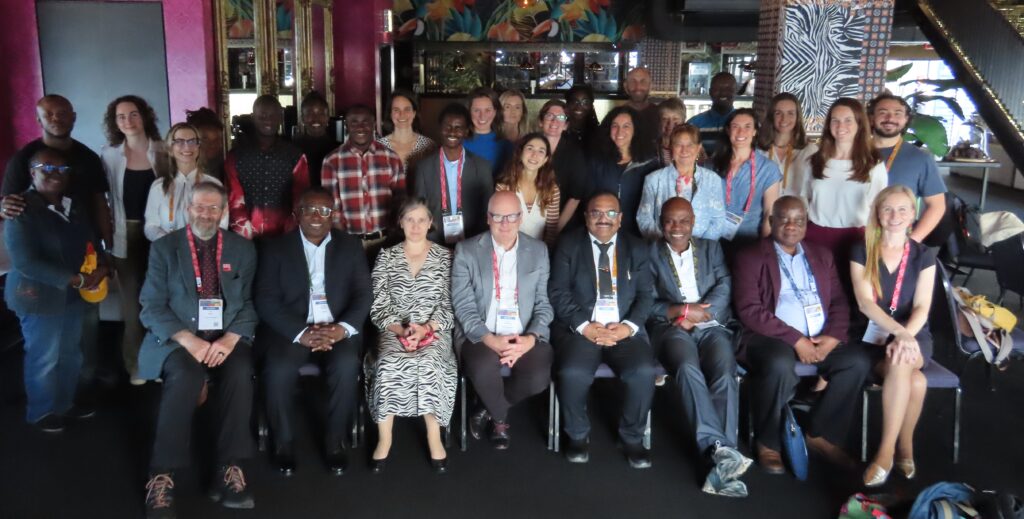
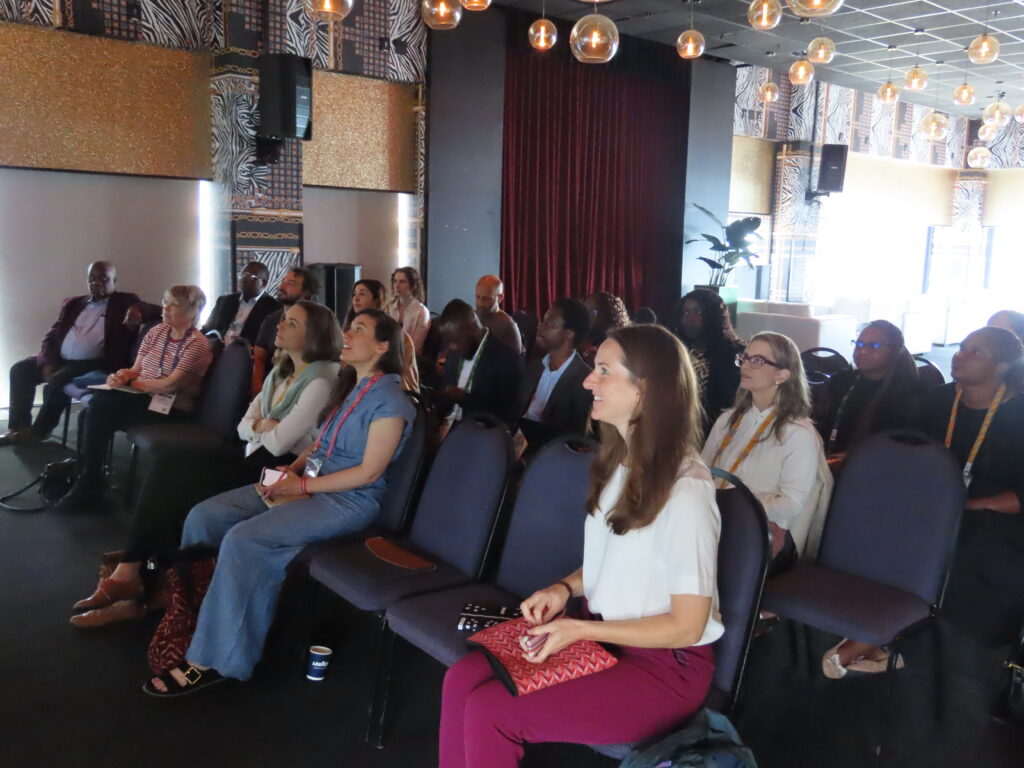
At a recent workshop held on 5 October in Cape Town, South Africa, maternal health experts, clinicians, and researchers from across the world — representing the UK, Zambia, Sierra Leone, India, Brazil, and South America — came together under the banner of the Papagaio project to chart a bold way forward in tackling one of the most urgent challenges in global health: pre-eclampsia and related maternal complications.
What united this diverse group was a shared purpose — to use innovation, research, and collaboration to save mothers’ and babies’ lives.
From Simple Ideas to Life-Saving Impact
The Papagaio initiative builds on a remarkable journey of discovery and collaboration that began with the development of the Cradle device — a simple yet transformative tool that helped reduce emergency hysterectomies and halved referrals for bleeding in low-resource settings. The idea grew into the Cradle Vital Signs Alert system, which uses the shock index to predict life-threatening complications. As Dr Katy Khurt, one of the researchers, noted when talking about the shock index, “If a woman’s red light was on, there was a 34% chance of dying from sepsis; if it was green, only 2%.” This simple, evidence-based innovation saved lives and informed new approaches to maternal care.
The Phoenix and Papagaio Studies: Scaling Success
Following the success of the Phoenix Trial — where not a single baby was lost — similar results were replicated in Zambia through the Cradle 4 Trial, which prevented up to 75% of neonatal deaths. Building on these insights, the Papagaio Study aims to refine the diagnosis and management of pre-eclampsia using affordable, accessible point-of-care (POC) testing for angiogenic biomarkers such as PlGF (placental growth factor).
The promise is clear: to bring world-class diagnostic innovation to where it’s needed most — in low- and middle-income countries, where maternal mortality rates remain unacceptably high. As one team member noted, “Women in Sierra Leone are 2000 times more likely to die from pre-eclampsia than women in the UK. That has to change.”
Innovation Across Continents
The Papagaio Diagnosis Trial is being implemented across four continents — with sites in Brazil, Zambia, India, and Sierra Leone — involving over 1,300 women to determine whether PlGF testing can reduce adverse maternal and neonatal outcomes for women with suspected preterm pre-eclampsia. The trial has already trained 70 research staff and more than 700 clinicians in testing and interpreting PlGF results. Despite challenges such as logistics, customs delays, and equipment failures, the teams have shown remarkable resilience and creativity in finding local solutions.
Community Engagement and Capacity Building
In Zambia, World Preeclampsia Day campaigns have helped raise awareness through community talks, drama skits, and survivor stories. Across all countries, capacity building has been central — with new PhD students emerging, local leadership strengthened, and strong links formed between research, policy, and practice. “It’s about doing the right research in the right way, with the right people,” Dr Alex Ridout reflected. “Sierra Leone dropped their maternal mortality rate because of this approach and if it can be done in the worst of places, it can be done anywhere. This work is about building the leaders of the future,” she said.
Building the Future of Maternal Health Research
The workshop also explored the Papagaio Biobank initiative — a groundbreaking effort to collect and store blood, serum, and urine samples from 1,500 women across three continents. These biobanks will support future biomarker validation and innovation, ensuring that discoveries made in high-resource settings can be adapted and scaled globally.
Another key focus was community participation. As Dr Louisa Samuels, one of the lead researchers and presenters, commented: “No research about us, without us.” By engaging women and communities in defining research priorities, the Papagaio team ensures that science remains grounded in the realities of those it seeks to serve. She commented on how the successes are due to the collaborative and iterative processes, which utilise feedback from all partner countries on outcome selection and pilot database, drawing on obstetricians, midwives, neonatologists and statisticians.
From Bench to Bedside: Turning Research into Action
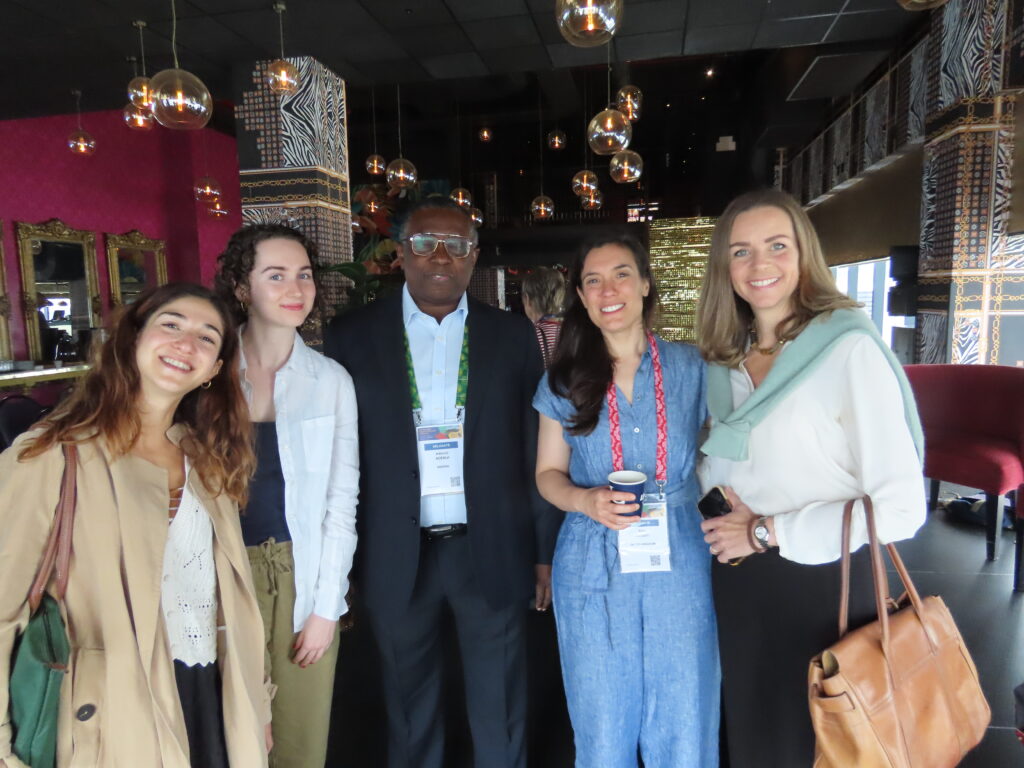
The workshop closed with a shared commitment: to translate research into real-world impact. “Preeclamptic deaths are largely avoidable,” said one clinician. “It’s not just about developing a test — it’s about what we do with it.” Participants emphasised the need to embed research into care, inspire health workers, engage policymakers early, and communicate results clearly and visually so they reach those who can make change happen.
As Professor Lucy Chappell, professor of obstetrics at King’s College London and the Chief Scientific Adviser for the UK Department of Health and Social Care, concluded:
“We are the vanguard of innovation. By empowering patients, inspiring the workforce, and fixing systems that no longer serve, we can make the shovel — the hard work of change — more appealing than the status quo.”
The Papagaio project stands as a powerful example of what’s possible when science, compassion, and collaboration cross borders. Together, these global teams are not only advancing research but also building the future of maternal health — one life, one innovation, and one partnership at a time.