

Dr Mukape Mukape is a Research Fellow in Maternal Health at King’s College London, pursuing his PhD through the NIHR PAPAGAIO scholarship. On study leave from the University of Zambia, where he lectures in Obstetrics, Gynaecology, and Human Anatomy, he also serves as a Senior Registrar at the University Teaching Hospital in Lusaka.
Within CRIBS Global, Dr Mukape coordinates the creation of a transcontinental biobank across Brazil, India, South Africa, and Zambia. This ambitious project collects biological samples from pregnant women with suspected or confirmed pre-term pre-eclampsia, a leading cause of maternal and perinatal death. Once established, the biobank will validate novel biomarker tests and open new pathways for research in low- and middle-income countries.
His leadership contribution has already delivered results: in Zambia, he exceeded recruitment targets for the PAPAGAIO Diagnosis Trial, enrolling 461 participants against a minimum of 250. He now supports the smooth running of the PAPAGAIO Delivery RCT across four study sites in Zambia: UTH, Ndola Teaching Hospital, Kitwe Teaching Hospital and Kabwe Central Hospital.
 💡 Lessons from Global Collaboration
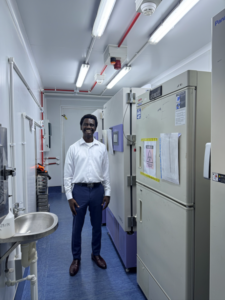
Dr Mukape’s work has taken him to biobanks in India, Sierra Leone, South Africa, and Zambia, deepening his expertise in biobanking in resource-limited settings. He reflects on the challenges of coordinating across diverse countries, navigating ethical regulations, shipment delays, and cold-chain logistics, but also on the resilience and teamwork such projects demand. He comments, “The global and collaborative nature of the CRIBS Global projects, particularly the PAPAGAIO Biobank and Validation studies, has taught me how to navigate project-related challenges, including logistical, cultural, communication, and resource limitations in diverse settings. This experience has not only taught me how to conduct novel international research but also strengthened my skills in leadership, coordination, teamwork, problem-solving, and resilience in such an enormous international, multi-centre project.
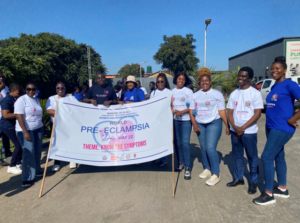
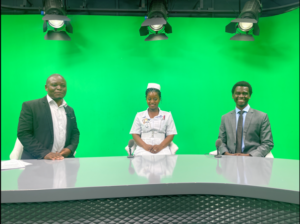
Community engagement has been a significant highlight for Muakpe. From focus groups with mothers and pre-eclampsia survivors to national TV appearances on World Pre-eclampsia Day, he has seen firsthand how awareness and dialogue can break barriers to care. He shares, “Participating in various community engagement and involvement activities is one of the most profound CRIBS Global experiences I have had. It is so fulfilling to engage local stakeholders, such as pregnant mothers, pre-eclampsia survivors, safe motherhood action groups, clinicians, chiefs, husbands/male partners, spiritual leaders, and non-governmental organisations. Such initiatives help to identify barriers and enablers for developing context-appropriate solutions in reducing maternal and perinatal deaths, particularly in low-resource settings where most pregnant women have their first booking in the second half of pregnancy. During last year’s World Pre-eclampsia Day activities, my adrenaline was running high before my first appearances on national and local TV! This year was different. I was calm, collected, and confident, helping to raise awareness about pre-eclampsia”.
 ❤️ A Personal Calling
Mukape’s passion for maternal health is deeply personal. The loss of his mother in childhood inspired him to pursue medicine and to work in the field of maternal health, determined to reduce preventable deaths. Later, as a resident doctor, he was called to treat a 16-year-old girl with pre-eclampsia, a case that cemented his commitment to maternal health research and advocacy. He describes this vivid experience, “A midwife called me at midnight for an emergency case in the labour ward. A 16-year-old, fifth-grade school dropout with her first pregnancy at 30 weeks of gestation was referred for status epilepticus from a rural clinic with a history of fitting several times at home. She arrived without an accompanying ambulance, and no basic investigations had been done. On admission, BP was 180/120 mmHg with 3+ proteinuria. According to our local guidelines, I diagnosed her with severe pre-eclampsia, prescribed the first doses of magnesium sulphate, antihypertensives, and dexamethasone. After stabilisation, I referred her to UTH, which has intensive care services for both the mother and baby. This experience solidified my deep passion for specialising in maternal health and has greatly influenced my future dreams and aspirations”.
He notes the systemic challenges in Zambia and other low-resource healthcare systems, especially in maternal health, where severe pre-eclampsia is often under-recognised and under-treated. He ascribes this to low health literacy, limited specialists, and inadequate medical equipment and infrastructure. Yet he remains optimistic, believing that affordable biomarker tests could be a ‘game-changer’ in reducing maternal and perinatal deaths.
🌱 What Mukape finds most rewarding and interesting about the work he does
A pregnant woman’s long journey that ends with a good outcome for her and the baby! With my particular interest in hypertensive disorders of pregnancy, this requires effective preventive strategies, early and accurate detection and safe timing of delivery. I am very excited that my interests align with the bold initiative of the CIRBS Global Group, which is dedicated to reducing preventable maternal and perinatal deaths, particularly those caused by high BP in pregnancy, in low-resource settings. I am further delighted to be involved in research on pre-eclampsia biomarker tests in a low-resource setting. I strongly believe that if these tests become available and affordable, they could be a game-changer in reducing adverse outcomes of pre-eclampsia in LMICs.
 Beyond the Lab
Away from research, Mukape is a devoted husband and father of two. He enjoys weekends with his family, tending to their poultry and garden, and cheering for Chelsea and Real Madrid, his European football teams of more than a decade.
Looking ahead, his immediate goal is to complete his PhD. In the next decade, he hopes to strengthen Zambia’s research capacity and continue contributing to global maternal health collaborations.
Closing Words
Dr Mukape expresses gratitude to his supervisors, colleagues, and funders, including NIHR and the Bill & Melinda Gates Foundation. He comments, “I am deeply indebted to my esteemed main supervisor, Professor Lucy C Chappell, for ensuring my PhD journey remains on track. Together with my other supervisors, Professor Bellington Vwalika, Dr Alice Hurrell, Dr Antonio de Marvao, Dr Margaret Kasaro-Phiri, and Dr Isaac Fwemba, I am very grateful for their continued support”.
Above all, he values the opportunity to coordinate projects that span continents, cultures, and communities, contributing to building local research capacity in Zambia and being involved in projects that bring hope for healthier futures for mothers and babies worldwide.